
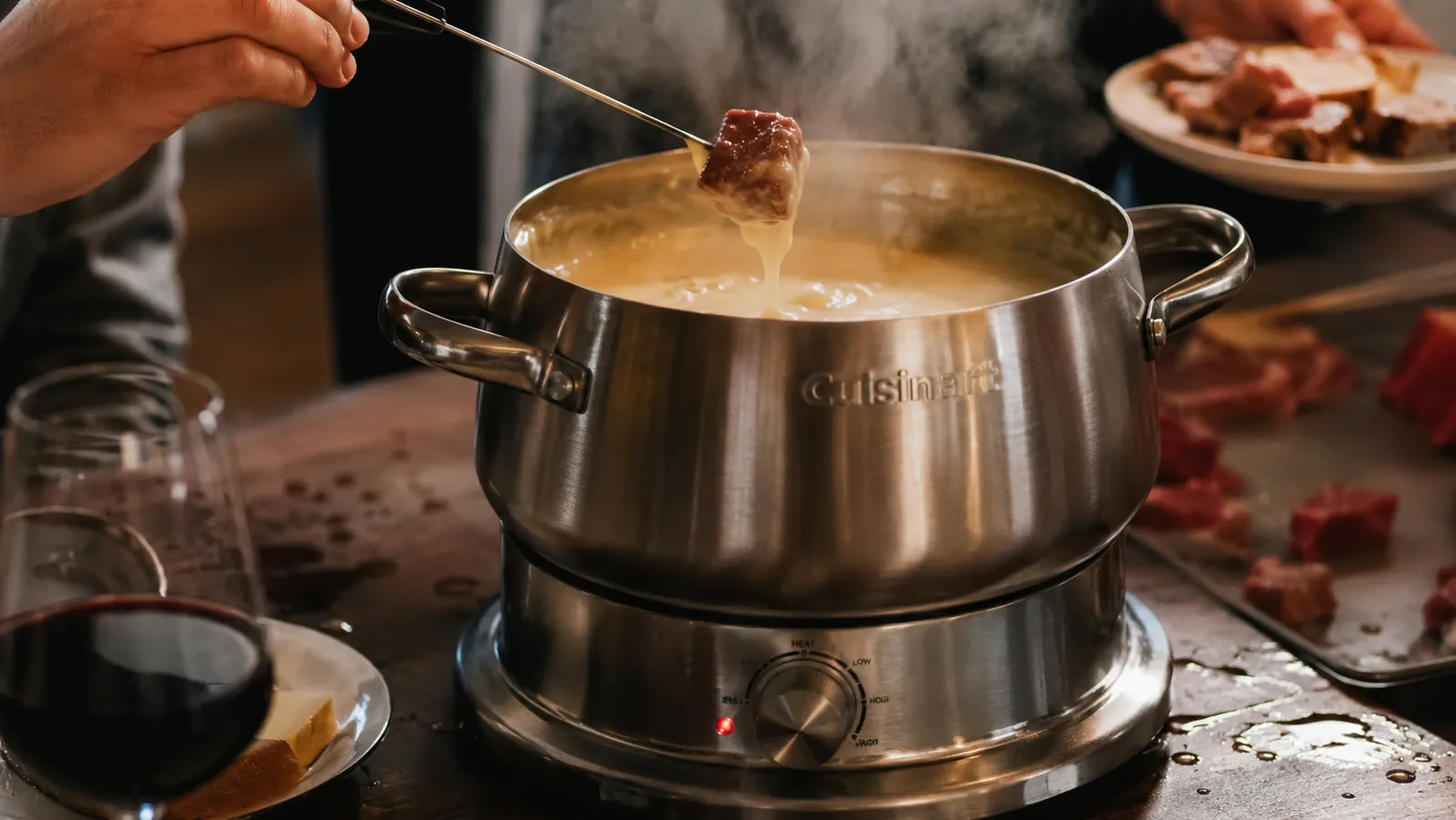
Everybody who leaves five stars on the Cuisinart page talks about the fun. Almost nobody mentions the oil that flicked onto my kitchen table the second time Danny and I tried frying beef tips in it, or the fact that this pot has spent more of the last six months tucked in a cabinet than it has sitting out on my counter. I still like it. I'm not walking that back. But if you're reading reviews trying to decide whether the Cuisinart CFO-3SSNAS fondue pot is worth bringing home, you deserve the parts that don't make it into a five-star headline.
I'm Jon. I'm 68, retired, and I live in a small coastal Texas town where the biggest decision most weeks is what Carol and I are cooking for whichever grandkids show up. I already wrote a full write-up on this site about the good side of owning this pot for half a year. This one is the other half of the story, the stuff that annoyed me, surprised me, or took longer to figure out than the box photos let on.
The Quick Verdict
A solid fondue pot with a few real drawbacks that a first-impressions review won't catch, but nothing that made me regret buying it.
Amazon Check Today's Price →Before You Buy, Know These Three Things
The oil setting will splatter if you don't cover it right, the dial has no numbers, and it's an occasional-use gadget that needs a real storage spot. None of that has stopped us from using ours. Check today's price on Amazon and go in with eyes open.
Amazon Check Today's Price on Amazon →How I've Actually Used It, Warts and All
Most of our fondue nights are chocolate or cheese, and honestly those two are close to foolproof once you get the hang of the dial. The oil setting is a different animal, and it's the one nobody warned me about before I bought this pot. The first time Danny and I decided to fry beef tips for a Sunday dinner with his wife, we assumed the included lid would keep things contained the way a splatter screen does on the stove. It doesn't, not entirely. Hot oil popped past the edge of that lid more than once, and we ended up with small dots of grease on the tablecloth and the edge of the table itself.
After that first attempt, I started setting the pot on a large cutting board with a towel underneath, and that's cut the mess down to almost nothing. But that's a fix I had to figure out on my own after a cleanup that took longer than the meal did. If you're picturing calm, mess-free oil frying at the table the way the marketing photos show it, temper that expectation a little. It's doable, it's just not as clean as chocolate or cheese.
Cheese has been the least fussy of the three for us, though I learned the hard way that adding cold wine straight from the fridge into hot cheese will make it seize up in seconds. Once I started letting the wine sit out for a bit before adding it, that problem disappeared. Small lesson, but one that isn't printed anywhere in the instructions that came with the pot.
There's also a safety piece that took me by surprise the first oil night. With four grandkids running around the house, I hadn't thought hard enough about how close a pot of hot oil sits to the edge of the table compared to a pot of chocolate or cheese. Now Carol and I make a point of keeping the little ones on the far side of the table and reminding the older two not to reach across it whenever oil is on the menu. It's not a design flaw exactly, more a reminder that this setting deserves a different level of attention than the sweeter modes do.
The Dial Has No Numbers, and That Bugs Me
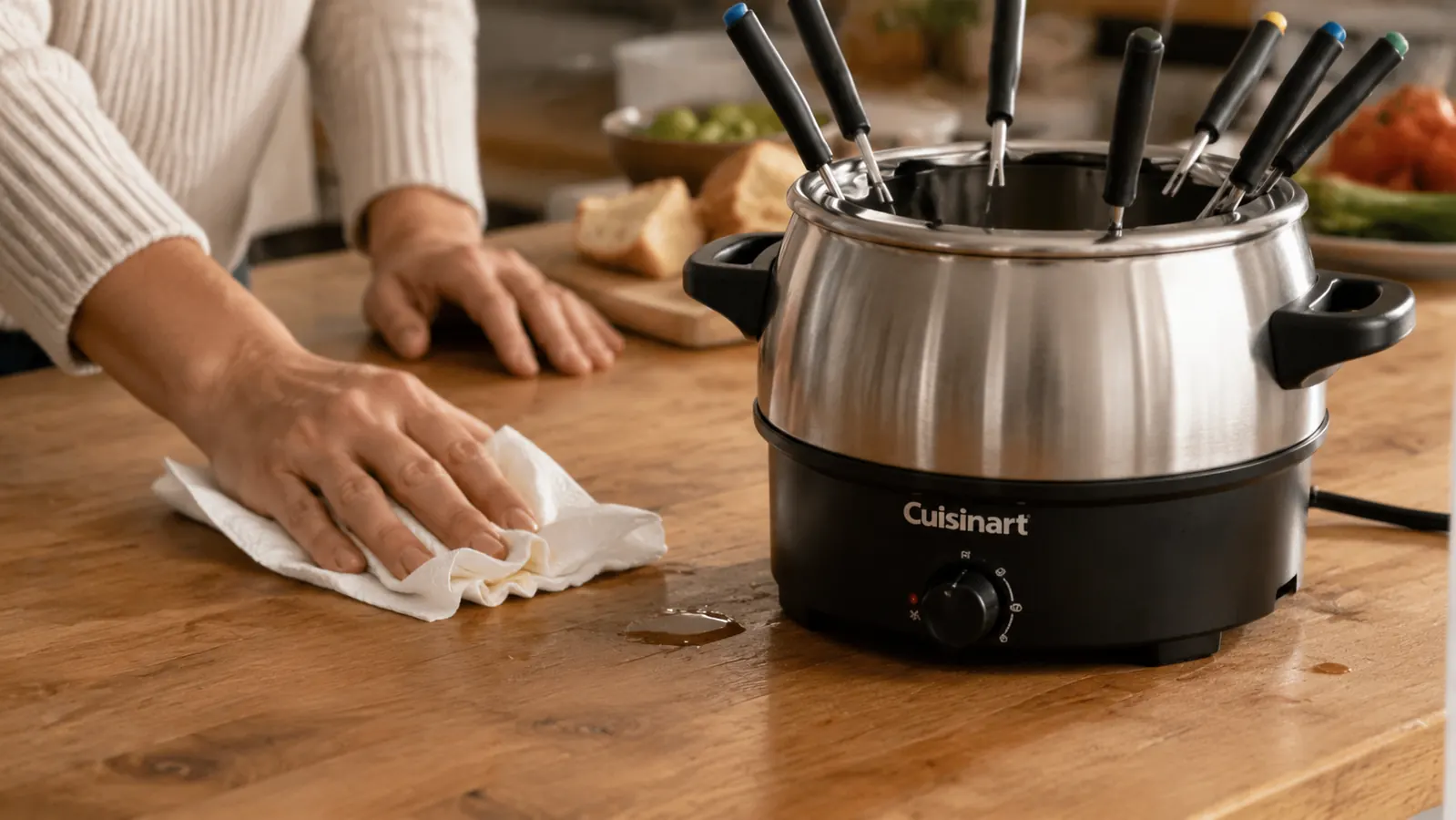
Here's something the glowing reviews rarely bring up. The temperature dial on the Cuisinart runs from low to high with no actual degree markings anywhere on it. For chocolate, that's a minor annoyance. For oil frying, where you actually want to know you're in a safe range for cooking meat through properly, it's more than a minor annoyance. I bought a cheap clip-on candy thermometer specifically because I didn't trust myself to eyeball whether the oil was hot enough to cook Danny's beef tips all the way through without guessing.
That thermometer wasn't included, it wasn't mentioned in anything I read before buying, and it solved a real problem the pot itself doesn't solve on its own. If you plan to use this mainly for chocolate and cheese, skip this section and don't worry about it. If oil frying is part of the plan, budget for a separate thermometer and don't assume the dial alone will get you there safely.
I will say once you've used the pot enough times to know roughly where your usual settings land, the guessing gets easier. I keep a sticky note on the inside of a nearby cabinet door with settings written down for chocolate, cheese, and oil so I'm not relearning it every single time. That workaround helps, but it shouldn't be necessary for a gadget in this price range.
Cleanup Isn't the Breeze the Listing Makes It Sound Like
The listing calls the interior nonstick and dishwasher safe, and both of those things are technically true. What it doesn't tell you is how much longer cleanup takes after an oil night compared to a chocolate night. Chocolate wipes out with a paper towel in under a minute. Oil is a different story. You're waiting for it to cool enough to handle safely, then you're dealing with grease that's worked its way into the little gap where the pot meets the base, and that gap is not something you can just run under the faucet.
Carol handles most of our dishes, and she's the one who pointed out that the base unit itself, the part with the cord and the heating element, can't go anywhere near water. So you're hand-wiping around electrical components with a damp rag, being careful the whole time, which takes patience that a quick dishwasher cycle simply doesn't require. It's not a dealbreaker, but it's a real difference between an oil-fondue night and every other kind, and it's the reason we do oil nights far less often than chocolate or cheese ones.
The forks are the one part of cleanup that's genuinely easy. They go straight into the dishwasher and come out fine every time. I mention that only because it's the rare part of this whole process where the marketing claim actually undersells how simple it is.
One more small thing on cleanup that took me by surprise. Because we don't use this pot every week the way some folks might use a toaster, a light film builds up on the stainless exterior between uses, mostly dust from sitting in the cabinet mixed with a bit of leftover residue from the last night we used it. It's nothing a quick wipe with a damp cloth won't fix, but if you're expecting to pull it straight out of storage and set it on the table looking showroom fresh every time, plan on an extra minute or two of wiping it down first.
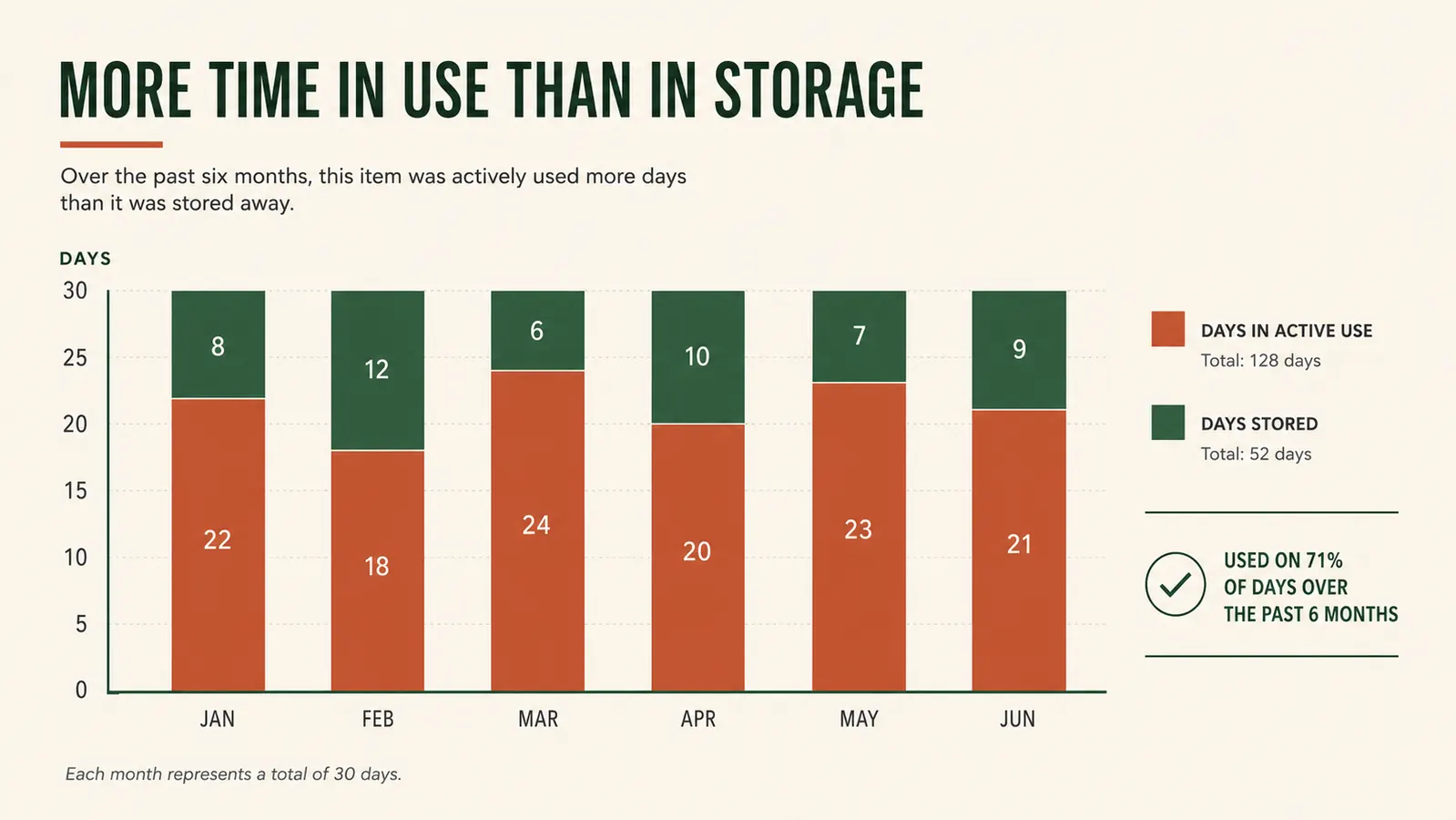
It Spends Most of Its Life in a Cabinet
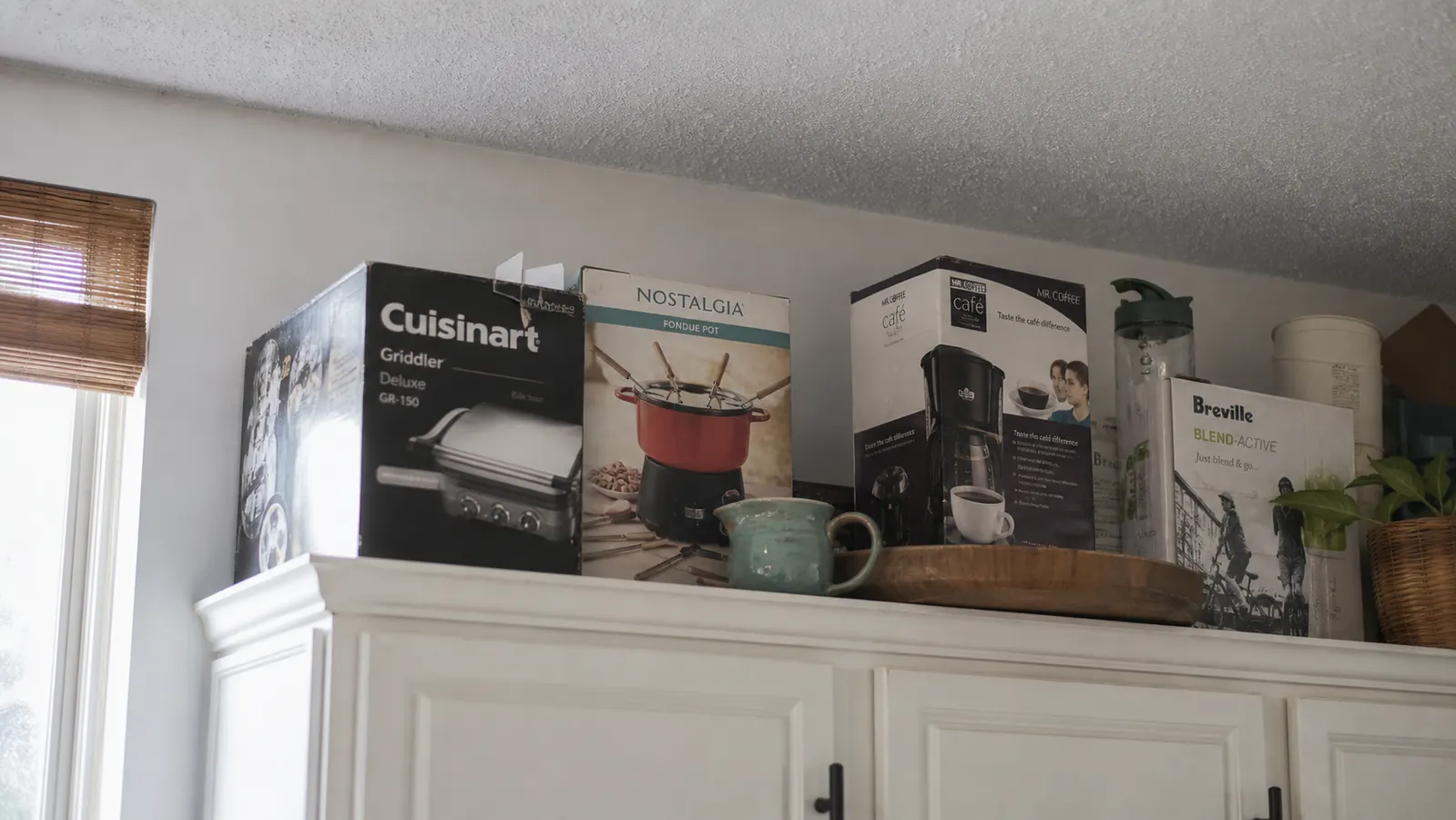
Here's the part I really didn't expect going in. This is a gadget you use for an occasion, not a daily countertop appliance, and that means it needs a real home somewhere out of the way. Ours lives on the top shelf of a cabinet above the refrigerator, wedged between a waffle iron we barely touch anymore and a slow cooker Carol uses at Thanksgiving. Getting it down and setting it back up isn't hard, but it's a step that a lot of daily-use kitchen gadgets don't require, and it's worth knowing before you buy that this isn't something that just sits out on the counter between uses in most households.
The box it comes in isn't built for long-term storage either. Ours got a little crushed on one corner within the first month, and I ended up finding a spare bin to keep the pot, the base, and the forks together instead of relying on the original packaging. If storage space is tight in your kitchen, that's a real consideration, not a small one. A gadget you only pull out every couple of weeks needs a spot, and this one is a little bulkier than I expected when I first opened the box.
There's also the matter of the cord length and where you can actually plug it in once it's sitting on the table. Our dining table is a good six feet from the nearest outlet, so we've been running an extension cord across the floor on fondue nights, taped down along the baseboard so nobody trips over it. It works, but it's an extra step I didn't plan for the first time I set everything up, and it's worth measuring your own setup before you assume the cord will reach comfortably.
None of this means it isn't worth owning. It means you should plan for where it lives before you buy it, the same way you'd think through storage for a stand mixer or a big roasting pan. Treat it like an occasional-use tool from day one and you won't be caught off guard the way I was.
What Surprised Me in a Good Way
It isn't all complaints. The thing that genuinely surprised me is how evenly this pot heats compared to what I expected from something in this price range. I've read complaints online about cheaper fondue pots developing hot spots that scorch chocolate on one side of the pot while the other side stays cool. I haven't run into that here after roughly twenty uses, and that's not something I take for granted after watching a friend of mine deal with exactly that problem on a different brand's pot last year.
The other pleasant surprise is how quiet the whole thing is. There's no fan, no motor noise, just a small indicator light and the heat itself. For something that sits in the middle of a dinner table while people are talking, that matters more than I expected it to before I owned one.
What I Liked
- Heats evenly with no hot spots after roughly twenty uses
- Silent operation, nothing to compete with conversation at the table
- Forks clean up easily in the dishwasher every time
- Handles all three fondue types if you're willing to work around the dial
Where It Falls Short
- Oil setting splatters more than the marketing photos suggest
- Temperature dial has no numbers, so oil frying really needs a separate thermometer
- Cleanup after oil nights takes real time and hand-wiping around the base
- Bulky enough that it needs a dedicated storage spot, not a daily countertop item
- Original packaging isn't built for long-term storage
- Cord may not reach a table that isn't near an outlet
Nobody's five-star review mentions the sticky note on my cabinet door with the settings written down. Mine does.
Questions I Wish I'd Asked Myself Before Buying
If I were doing this over, I'd ask myself a few things first. Do I actually have a spot to store this that isn't going to bother me every time I open that cabinet? Am I comfortable hand-washing a base unit instead of tossing everything in the dishwasher after every use? And am I going to use the oil setting often enough to justify buying a separate thermometer, or am I mostly here for chocolate and cheese, where none of this matters nearly as much?
I'd also ask about outlet placement near wherever I plan to set the table up, since that's the kind of detail that sounds trivial until you're the one taping an extension cord to the floor on a Sunday afternoon. It's a small thing, but small things are exactly what an honest review is supposed to cover, since the big stuff, does it heat, does it hold up, is usually covered well enough by every other review out there.
Answering those questions honestly before I bought would have saved me a little trial and error in the first month. It wouldn't have changed my decision. I'd still have bought the Cuisinart. But I would have gone into it with the towel already on hand and the extension cord already picked out, instead of figuring both out the hard way during an actual dinner with company at the table.
Who This Is For
If you're mainly after chocolate and cheese fondue for family nights, most of what I've described here barely applies to you. Those two modes are close to foolproof, the mess is minimal, and the dial's lack of numbers is a non-issue once you've used it a handful of times. This is a good fit for anyone who wants an occasional centerpiece for family dinners and doesn't mind giving it a permanent spot in a cabinet between uses.
Who Should Skip It
If your kitchen is already tight on storage, or if oil frying at the table is the main reason you're buying it, think it through a little more. You'll want a separate thermometer, a plan for splatter control, and patience for the longer cleanup that comes with hot oil. It's manageable, we still do it a few times a year, but it's not the effortless experience the product photos imply, and it's fair to know that before you spend the money.
Still Think It's Worth It? So Do We.
Every gadget has a real side and a marketing side. This one's real side includes a few annoyances, but six months later it's still the pot we pull down for Sunday dinners. Check today's price on Amazon and decide with the full picture.
Amazon Check Today's Price on Amazon →